 +91-8069099774


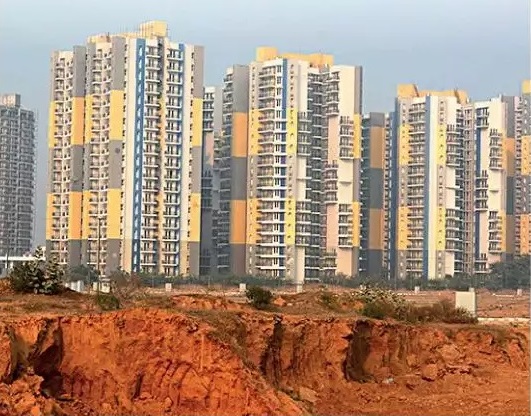
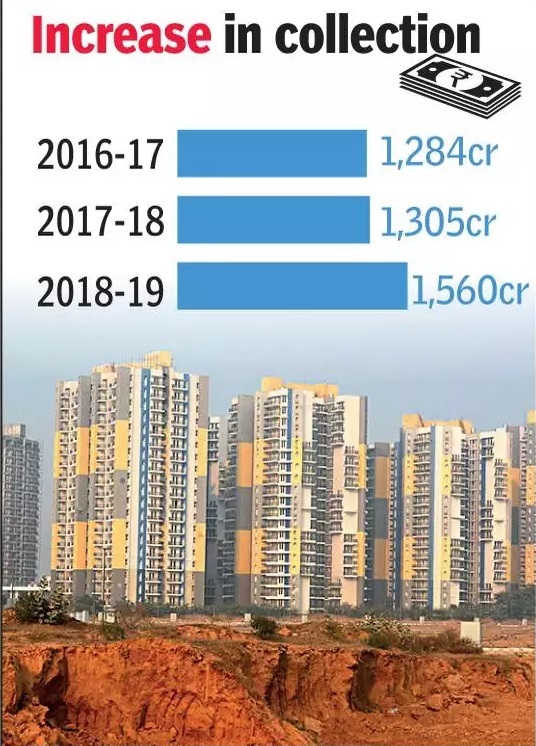
Despite the ongoing slump in the real estate market, Haryana government has witnessed a sharp increase of 22% in stamp duty collections in the past two years. These numbers have been collected from the four tehsils of Gurugram, Manesar, Farrukhnagar and Wazirabad. The numbers have increased from Rs 1284Cr in financial year 2016-17, to Rs 1305Cr in 2017-18 to a further upsurge to Rs 1560 Cr in 2018-19 respectively. Moreover, the creation of sub tehsil of Wazirabad that comprises of all the posh localities of Gurugram like Golf Course road, DLF, Sushant Lok and Sector 28 and 27 has also benefited the state government. One of the major reasons for this surge in revenue is the revision of Circle Rates twice by the Haryana government.
Circle rates refer to the minimum rate notified by the government through the registrar or sub registrar office of Gurgaon for registration of property transactions. Circle rates tend to vary across various areas of a city depending upon the market value of the area and the facilities that are available in that area. In fact, circle rates differ within cities in the same state, and among various localities of a city. These rates are an indicator of likely prices of properties in various areas.
Typically, the government tends to assign higher circle rate to commercial properties and lower rates for residential properties in gurgaon. Circle rates in Gurgaon also depend upon the type of the property. Registrar value of flats and apartments in Gurgaon is different from that of plots and independent houses even in the same area. Stamp duty is payable as a percentage of the higher of declared agreement value and assessed value as per circle rate chart.
Circle rates are notified by the government and are used as reference point for payment of stamp duty on property transaction registrations in Gurgaon. Market prices refer to the actual price at which property sale-purchase transactions are transacted between buyers and sellers. In most cases, circle rates tend to be slightly lower than market prices. However, in some cases it is seen that the circle rates may even be higher than market prices. The revision of rates by the state government has made sure that for residential colonies, new rates will be three times higher than that of the agricultural land.
Deputy commissioner Amit Khatri in an ET Times interview opines, that improving infrastructure in the city, ease of access and stable circle rates have encouraged land investment and contributed to the increase in stamp duty collections.
The reforms initiated by the Khattar government in increasing the floor to area ratio (FAR) has also increased the revenue for the state government. According to new norms, new houses and the residential projects expected to be constructed in the city now have more carpet areas as compared to earlier projects. With the implementation of this move in the 75 square meter area, 33 per cent of more space area has been added and in 101 to 150 square meters, 53 per cent more space is included. There is an increase in property transactions due to increase in FAR in independent plots which also allows construction of additional independent floors to already plotted houses.
According to developers, the completion of many pending projects has led to an increased number home buyers finally registering their property in Gurgaon resulting in an increase in stamp duty revenue. The increase in the revenue due to the stamp duty collections have resulted in cash strapped public agencies like Gururgam Metropolitan Development Authority (GMDA) and Municipal Corporation of Gurugram (MCG) now demanding a percentage of share from the revenue.
Sources:
https://timesofindia.indiatimes.com/city/gurgaon/gurgaon-records-22-rise-in-stamp-duty-collections/articleshow/69732448.cms
https://www.myloancare.in/gurgaon-circle-rate-revised/














Recent Comments