 +91-8069099774


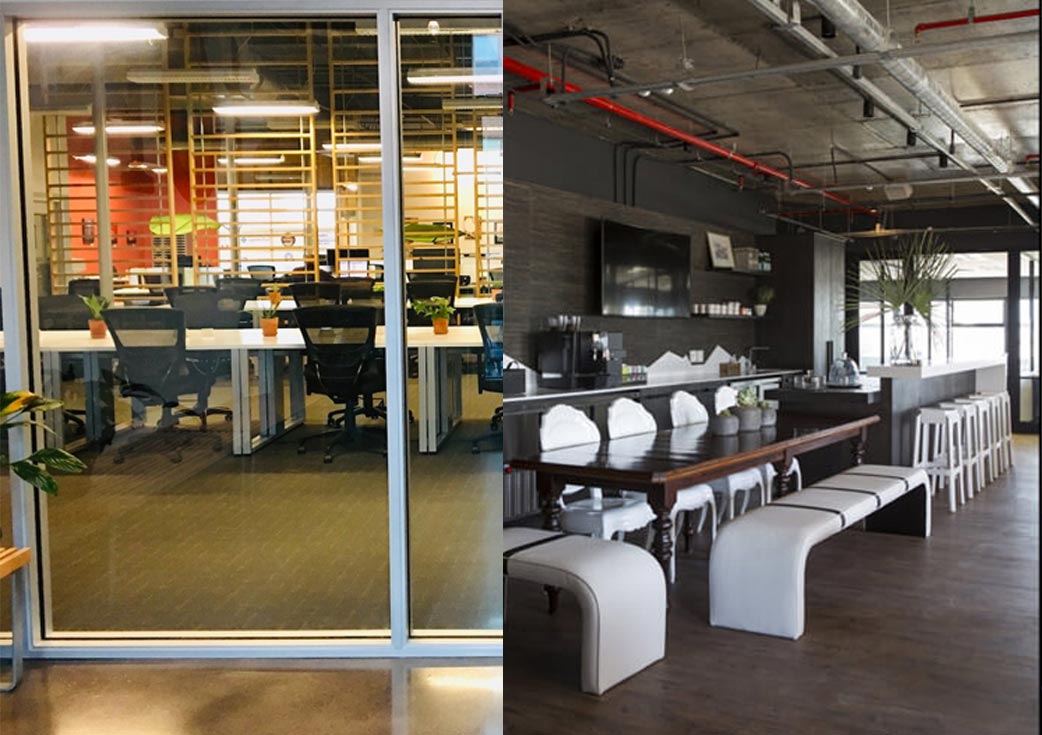
Real estate sector’s three traditional segments—commercial, residential and retail—face different challenges and offer different opportunities. Recently, two new sub-segments of co-working and co-living spaces have emerged.
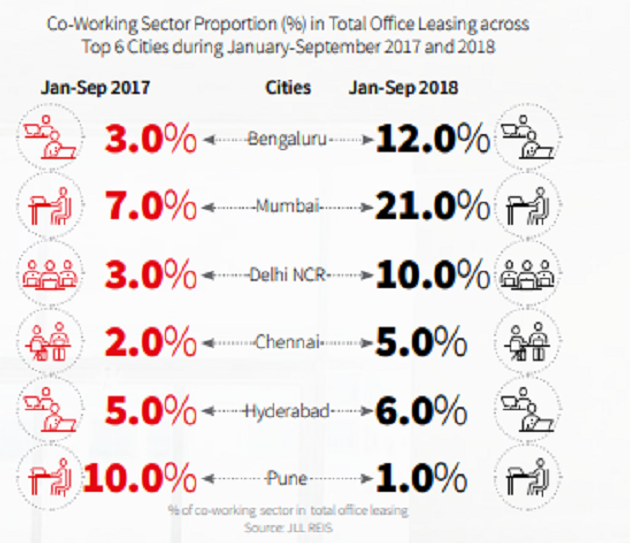
According to a joint report released by JLL-FICCI, the co-working market already accounts for 12% of the office leasing market in the first quarter of calendar year 2019, up from 8% in 2018. Co-living, too, offers two to four times higher returns than the traditional residential yield of 2-3%, indicating that both these segments are set to increase their footprint in the real estate market.
What is co-living?
1. A co-living space is a set-up wherein people live together and share areas like kitchens, recreational rooms, living rooms and balconies, but have private bedrooms. This is a growing trend in urban centers. The co-living concept provides the convenience and community friendly living, apart from financial perks.
2. They offer a wide range of services that take care of tenant requirements like utilities, housekeeping and connectivity, and offer well-designed shared spaces such as lounges, business centers, game rooms and gyms.
The JLL – FICCI report said that out of 35 million tertiary students in India, 10 million will be driven to other cities in search of educational or employment opportunities. “As a result, some of the larger co-living operators like Stanza and Placio are targeting this student demographic and filling the void left by the lack of purpose-built student accommodation,” it added.
Many people reportedly face a lot of discrimination while job hunting on the basis of their marital status, food preferences and in some cases, religion. If the co-living industry flourishes, it will offer people an alternative. Startups and small companies have already begun tapping this potential. OYO recently announced its co-living vertical called OYO Living. WeWork, based in the US, is a co-working startup that may be delving into this industry with its new offering WeLive in India this year.
Co-living gives higher rental yields, loosens inventory
Unsold commercial as well as residential inventory now has a new prospect in the form of co-working and co-living. Until recently, these concepts were almost non-existent or highly unorganized in India. Now, developers have an option to lease out unsold inventory to organized operators who are more than happy to offer competitive yields. More developers will soon be joining hands with startups.
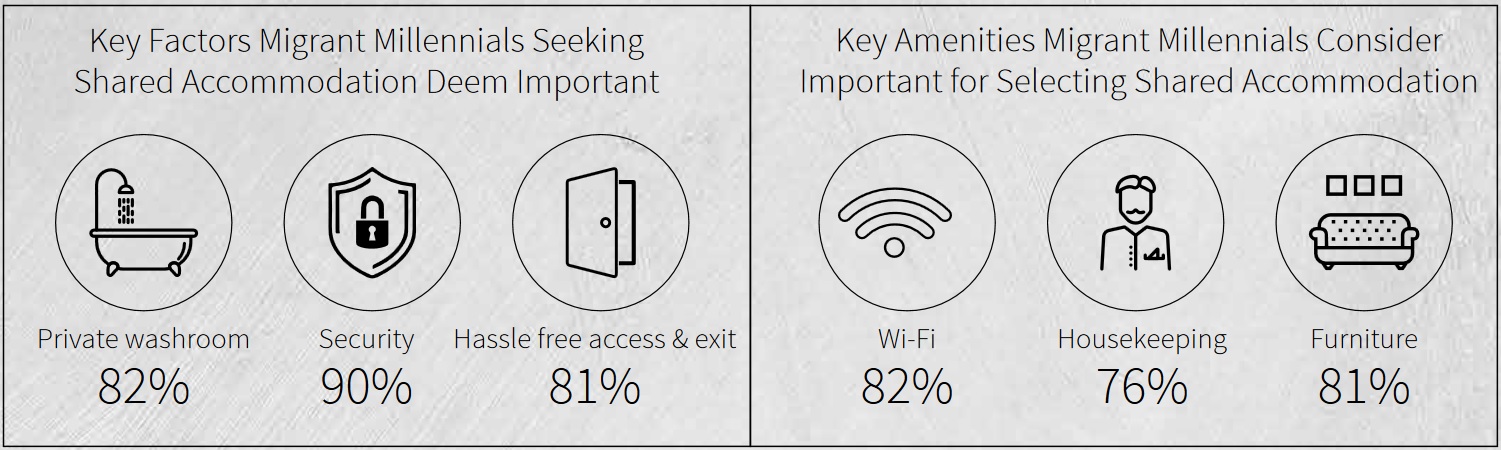
According to the report, co-living in Delhi NCR will constitute nearly 40% of this potential market opportunity. Affordability, convenience and community are the pull factors for the migrant millennial workforce. This will drive the growth in the co-living space. Share of co-working space in office leasing will increase manifold in the near future. Mumbai records the highest proportion of co-working space to office leasing in 2018.
 What is Co-Working?
Coworking has been revolutionizing the work culture across the globe for the past few years. The spurt in start-ups and growth of the gig economy first created a demand for co-working spaces in India too. Now, the conglomerates and MNCs too are moving out of their traditional office set-ups, triggering the next surge in their popularity. According to the report, while the co-working concept has readily been accepted in the metros, Tier II cities are also opening up to this new concept.
1. Coworking spaces around Gurugram, Delhi, Noida are becoming increasingly popular. Walk into one of the floors of a co-working property in Gurgaon Udyog Vihar, it has sleeping pods, private rooms with air conditioners, televisions, music systems, and lockers inside. A ‘frustration zone’ is in the works too. Those in the co-working space business attribute this shift to an expensive real estate market and the ease and swiftness of setting up a new office with a plug-and-play model.
2. The reasons, however, go beyond capital and convenience. The corporate workforce, much of it comprising millennials, benefits from the vibrant design and environment such spaces have meticulously created. The vibe is generally youthful and positive. Professionals report an enhancement in work-life balance and an improvement in personal and professional relationships due to the emergence of an ideal third space between work and home.
A growing number of companies are preferring co-working spaces to creating new spaces or expanding their facilities, especially if they are setting up new teams or departments. According to Ramesh Nair, Chief Executive Officer and Country Head, JLL India, “the co-working segment is now riding a maturity curve. Operators within this market are now offering multiple formats—from entire buildings to build-to-suit co-working offices within conventional workplaces. With the benefits of cost reduction and shared amenities, the segment provides a tremendous business potential to all – developers and occupiers.”
JLL says in India’s top cities of Delhi National Capital Region (NCR), Mumbai, Bangalore and Pune, a co-working space is likely to lead to cost savings in the range of 20-25% when compared with leasing a traditional office space. OYO which recently acquired Innov8, a co-working start-up, aims to open more than 35 new co-working spaces in major metro cities over the next one year. It has also started two new co-working brands—PowerStation and WorkFlo, which will cater to a variety of start-ups and companies. On a worldwide level, co-working spaces are expected to fully outgrow the traditional serviced office model and move onto the ownership-based model. The future of these spaces predicts moving away from lease-based model and adopt a more developed in partnership type structure with the land/property owner, developer and the space- provider.
Sources:
http://www.naredco.in/notification/pdfs/Co-working,%20%20Reshaping%20Indian%20Workplaces.pdf
http://ficci.in/spdocument/23102/Co-living_Reshaping-Rental-Housing.pdf














Recent Comments